
Introduction
Titanium ball bearings are specialized mechanical components designed to support rotating parts while reducing friction and enabling smooth movement. Known for their lightweight construction, corrosion resistance, and excellent strength-to-weight ratio, Titanium Ball Bearings are used in applications where conventional steel bearings may not provide the desired performance. They are particularly valuable in industries that require durable components, reduced equipment weight, and reliable operation under challenging environmental conditions.
As manufacturing technology continues to advance, engineers and equipment manufacturers are exploring materials that can improve efficiency and extend the service life of mechanical systems. Titanium is one such material because it combines several useful properties in a single metal. Understanding the features, benefits, limitations, and applications of titanium ball bearings can help businesses and engineers make informed decisions when selecting components for specialized machinery.
What Is a Titanium Ball Bearing?
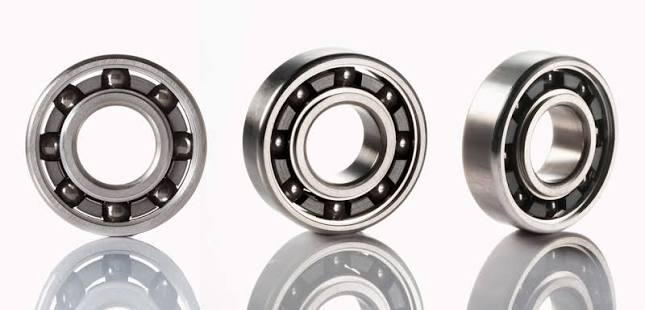
A titanium ball bearing is a bearing assembly that uses spherical rolling elements to reduce friction between moving parts. Traditional ball bearings typically consist of an inner race, an outer race, a set of balls, and a cage that maintains appropriate spacing between the balls. In titanium ball bearings, some or all of these components may be manufactured from titanium or titanium alloys, depending on the design and intended application.
The rolling elements move between the bearing races, allowing one component to rotate relative to another with less friction than direct sliding contact would produce. This arrangement supports smooth movement and helps mechanical systems operate efficiently.
It is important to understand that not every bearing described as a titanium ball bearing is made entirely from titanium. Some designs use titanium components alongside ceramic or other bearing materials. The precise material composition can significantly influence load capacity, wear resistance, operating temperature, and overall performance.
Key Properties of Titanium Ball Bearings
1. Lightweight Construction
One of the most important characteristics of titanium is its relatively low density compared with steel. Titanium is approximately 45% less dense than steel, although the exact comparison depends on the specific grades involved.
This lower density can help reduce the weight of rotating assemblies and moving machinery. In aerospace equipment, robotics, and portable devices, minimizing component weight can improve overall system efficiency and simplify mechanical design.
However, lower weight does not automatically mean that a titanium bearing will outperform a steel bearing. Engineers must also consider hardness, contact stress, raceway material, lubrication, and operating speed.
2. Excellent Corrosion Resistance
Titanium naturally forms a thin, stable oxide layer on its surface. This protective layer helps the material resist corrosion in many environments, including exposure to moisture and certain chemicals.
This characteristic makes titanium an attractive option for specialized machinery operating in marine environments, chemical-processing facilities, and equipment exposed to corrosive substances.
Nevertheless, titanium is not resistant to every chemical environment. Its suitability depends on the chemical concentration, temperature, surrounding materials, and specific titanium alloy used.
3. High Strength-to-Weight Ratio
Titanium alloys can provide substantial strength while maintaining a relatively low component weight. This property is particularly useful in applications where structural strength and lightweight design are both important.
A properly engineered titanium bearing assembly can contribute to a compact mechanical system without unnecessarily increasing its overall mass. The final load capacity, however, depends on the entire bearing design rather than the strength of titanium alone.
4. Temperature Performance
Titanium alloys can retain useful mechanical properties across a range of temperatures. Their performance in a bearing assembly still depends on the selected alloy, surface treatment, cage material, lubricant, and mating components.
For high-temperature applications, engineers should evaluate the complete assembly instead of assuming that titanium alone guarantees reliable operation. Lubrication breakdown, thermal expansion, and changes in material hardness can affect bearing performance.
Major Benefits of Titanium Ball Bearings
Reduced Equipment Weight
Weight reduction is an important objective in many modern engineering projects. Replacing selected steel components with titanium alternatives may reduce the mass of an assembly, especially when several lightweight components are used together.
This benefit is relevant to aerospace systems, precision instruments, robotic equipment, and specialized transport machinery. Reduced rotating mass can also influence the energy required to accelerate moving components, although the actual improvement depends on the system’s design.
Long-Term Corrosion Protection
In environments where corrosion is a major concern, titanium can help reduce material degradation. This may lower the need for frequent component replacement and support more consistent equipment operation.
The benefit is especially useful in applications exposed to humid conditions, saltwater, or compatible industrial chemicals. Proper sealing, suitable lubrication, and regular inspections remain essential for maintaining reliable performance.
Potential Maintenance Advantages
The corrosion resistance of titanium can reduce certain maintenance problems associated with rust and environmental damage. In appropriately designed applications, this may contribute to longer service intervals.
However, bearing maintenance requirements are also influenced by contamination, lubrication, alignment, load, and operating speed. Titanium construction does not eliminate these factors, so maintenance schedules should follow the equipment manufacturer’s recommendations.
Design Flexibility
Titanium alloys can be used in specialized bearing designs that prioritize reduced weight, corrosion resistance, or particular environmental requirements.
Manufacturers can select suitable alloys and combine titanium with other materials to achieve specific performance objectives. This flexibility allows engineers to develop components for applications where ordinary bearing materials may have limitations.
Common Applications of Titanium Ball Bearings
Aerospace and Aviation
The aerospace industry frequently evaluates titanium because of its strength-to-weight ratio and corrosion resistance. Specialized bearing assemblies may be considered for lightweight mechanisms, control systems, and equipment where reducing mass is important.
However, aerospace bearings must satisfy strict requirements for reliability, fatigue resistance, dimensional accuracy, and operating conditions. Titanium is not automatically the preferred material for every aircraft bearing, and material selection depends on the engineering specification.
Marine Equipment
Marine environments can expose mechanical components to moisture, salt, and other corrosive conditions. Titanium’s resistance to many forms of corrosion makes it useful in selected marine mechanisms and specialized rotating assemblies.
Potential applications include precision instruments, equipment used in marine research, and certain components in corrosion-sensitive systems. Engineers must still assess galvanic corrosion risks when titanium is connected to dissimilar metals.
Medical and Laboratory Equipment
Titanium is widely valued in medical engineering because of its corrosion resistance and compatibility with various demanding applications. Certain specialized bearing designs may be considered for laboratory instruments, medical equipment, and precision mechanisms.
The suitability of a titanium bearing for medical use depends on factors such as cleanliness, material certification, sterilization requirements, and regulatory standards. A component intended for medical equipment must meet the requirements of its particular application.
Robotics and Automation
Robotic systems often require components that are compact, lightweight, and capable of supporting accurate movement. Titanium ball bearings may be useful in selected robotic joints, precision mechanisms, and specialized automated equipment.
Reducing component mass can help designers manage moving loads, while corrosion resistance may be beneficial in environments involving moisture or cleaning chemicals. Engineers must balance these advantages against the bearing’s cost and mechanical performance.
Chemical and Industrial Machinery
Certain industrial environments expose bearings to substances that can damage conventional materials. Titanium may be suitable for specialized equipment when its chemical compatibility has been confirmed.
Applications can include selected chemical-processing mechanisms, precision production equipment, and machinery operating in corrosive surroundings. The bearing’s seals, cage, lubricant, and mating surfaces must also be compatible with the environment.
Titanium Ball Bearings Compared With Steel Bearings
Steel ball bearings remain widely used because they offer established performance, high hardness, and competitive pricing. They are available in many configurations and can support demanding loads when properly designed.
Titanium ball bearings offer advantages in weight reduction and corrosion resistance, but they are not necessarily stronger, harder, or more wear-resistant than bearing-grade steel. Titanium’s lower hardness and different tribological characteristics can create challenges in rolling-contact applications.
| Feature | Titanium ball bearings | Steel ball bearings |
|---|---|---|
| Weight | Generally lighter | Generally heavier |
| Corrosion resistance | Excellent in many environments | Depends on steel grade and protection |
| Hardness | Usually lower than bearing-grade steel | Often very high |
| Cost | Typically higher | Often more economical |
| Specialized applications | Useful where weight and corrosion matter | Suitable for many general-purpose uses |
The most appropriate option depends on operating conditions, expected loads, lubrication, required service life, and total ownership cost.
Important Factors When Selecting Titanium Ball Bearings
Choosing the right titanium ball bearing requires careful evaluation of several technical factors.
Load capacity: Determine the radial and axial loads the bearing must support. Verify that the complete bearing assembly can handle the expected forces.
Operating speed: Confirm that the design is suitable for the intended rotational speed. Friction, lubrication, and heat generation can influence performance.
Material composition: Identify whether the bearing uses titanium for the balls, races, cage, or multiple components. Different material combinations produce different results.
Lubrication requirements: Select an appropriate lubricant based on operating temperature, speed, environmental exposure, and manufacturer guidance.
Dimensions and tolerances: Accurate dimensions and suitable tolerances are essential for proper installation, alignment, and smooth rotation.
Supplier quality: Consider material traceability, manufacturing precision, quality-control procedures, and relevant certifications before purchasing.
Evaluating these factors helps ensure that the selected bearing meets the actual requirements of the application rather than relying on material advantages alone.
Challenges and Limitations
Despite their benefits, titanium ball bearings have several limitations. Their purchase price is often higher than that of standard steel bearings, and titanium’s lower hardness can create wear-related challenges in certain rolling-contact applications.
Titanium also has different friction and galling characteristics from many conventional bearing materials. Consequently, the selection of mating surfaces, surface treatments, lubrication, and component geometry is especially important.
Manufacturing precision can further affect cost because specialized machining, finishing, and quality inspection may be required. For applications involving heavy loads or continuous high-speed rotation, conventional bearing steel or hybrid ceramic designs may offer a more appropriate balance of performance and cost.
Conclusion
Titanium ball bearings provide a specialized solution for engineering applications that benefit from lightweight construction, corrosion resistance, and carefully optimized mechanical design. Their potential uses span aerospace equipment, marine systems, robotics, medical instruments, and selected industrial machinery.
However, choosing a titanium ball bearing requires more than comparing material properties. Load capacity, hardness, wear behavior, lubrication, operating speed, and total cost must all be considered before a decision is made.
By evaluating these factors and working with a qualified bearing manufacturer, engineers can identify whether titanium is the right material for their equipment. When the application genuinely benefits from its distinctive properties, a well-designed titanium ball bearing can contribute to dependable operation and effective mechanical performance.
