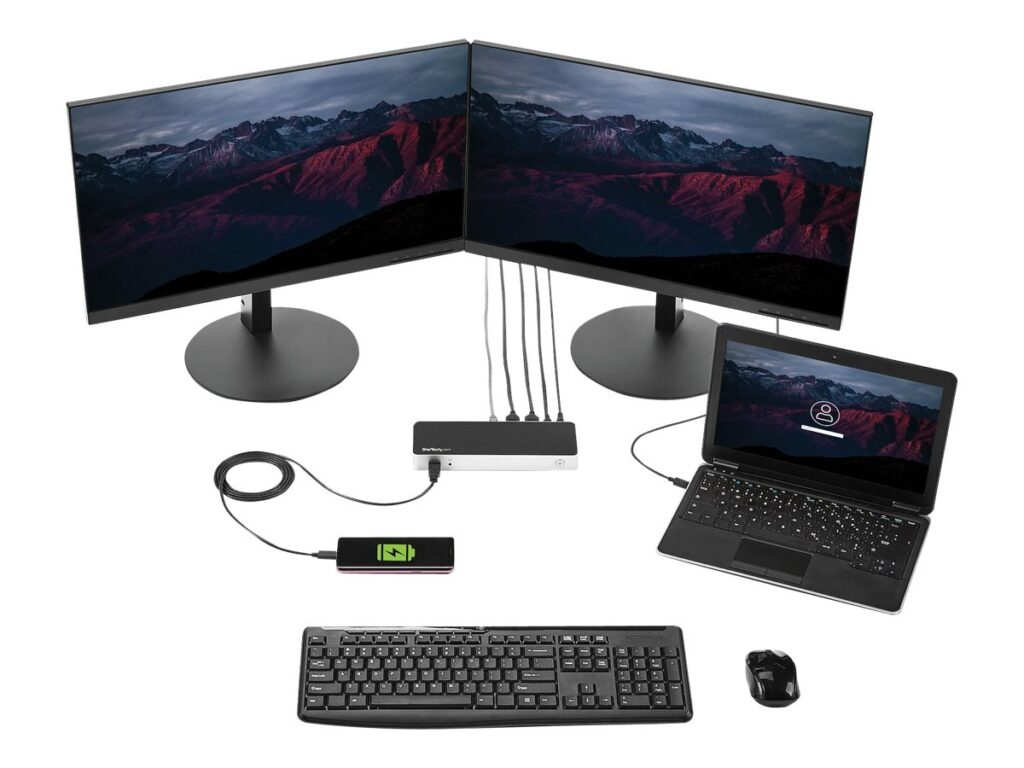

Modern professionals rely on multiple devices and applications to complete their daily tasks efficiently. Whether you work from home, manage a business, create digital content, or handle complex spreadsheets, having an organized workstation makes a significant difference. One of the best ways to enhance your workspace is by using a Windows docking station for dual monitors. This versatile device transforms a standard laptop into a complete workstation, allowing users to connect multiple displays and essential peripherals with ease.
A Windows docking station for dual monitors simplifies cable management, increases productivity, and creates a more comfortable working environment. Instead of constantly plugging and unplugging devices, users can connect everything through a single docking station while enjoying the benefits of dual-screen multitasking.
Why Dual Monitor Workstations Are Becoming Essential
As workloads become more demanding, a single laptop screen often isn’t enough. Many professionals need to monitor emails, attend virtual meetings, analyze data, edit documents, and browse websites simultaneously.
A Windows docking station for dual monitors provides an easy solution by allowing users to expand their desktop across two external displays. This expanded workspace reduces the need to switch between windows constantly, helping users remain focused throughout the day.
Whether you’re working in finance, programming, education, healthcare, or marketing, dual monitors improve efficiency by keeping important information visible at all times.
What Is a Windows Docking Station for Dual Monitors?
A Windows docking station for dual monitors is a hardware accessory that connects your Windows laptop to multiple external displays while adding numerous additional ports.
Most docking stations include:
HDMI Ports
Connect two high-resolution monitors with stable video output.
DisplayPort Connections
Ideal for professional displays requiring high refresh rates and excellent image quality.
USB Ports
Connect keyboards, mice, printers, webcams, external drives, and other accessories.
Ethernet Port
Provides faster and more reliable internet than Wi-Fi.
Audio Connections
Support speakers, microphones, or headphones.
Power Delivery
Many docking stations charge compatible laptops while transferring data through a single USB-C cable.
The result is a cleaner, more organized desk with fewer cables and greater convenience.
Boosts Multitasking Efficiency
One of the biggest productivity advantages of using a Windows docking station for dual monitors is improved multitasking.
Instead of minimizing and maximizing applications repeatedly, users can dedicate each monitor to specific tasks.
For example:
- One monitor displays spreadsheets.
- The second monitor shows email or video conferencing.
- The laptop screen remains available for messaging or project management software.
This workflow minimizes interruptions and helps maintain concentration.
Studies have consistently shown that dual monitors reduce task completion times by allowing users to access information more quickly.
Reduces Workspace Clutter
Cable clutter creates unnecessary distractions and makes desks difficult to organize.
A Windows docking station for dual monitors centralizes device connections into one hub. Rather than connecting multiple accessories individually to your laptop, everything plugs directly into the docking station.
Benefits include:
- Fewer visible cables
- Cleaner workstation
- Easier maintenance
- Faster setup
- Professional appearance
An organized workspace often leads to improved focus and reduced stress.
Makes Laptop Connections Faster
Many professionals frequently move between home, office, and meeting rooms.
Without a docking station, reconnecting monitors, USB devices, Ethernet cables, and charging cables becomes repetitive.
A Windows docking station for dual monitors simplifies this process dramatically.
Instead of connecting several cables individually, users simply plug in one USB-C or Thunderbolt cable to instantly access:
- Two monitors
- Keyboard
- Mouse
- Network connection
- Audio devices
- External storage
- Laptop charging
This convenience saves valuable time every single day.
Enhances Remote Work Productivity
Remote work has become the standard for many businesses.
A Windows docking station for dual monitors helps create a professional home office that closely resembles a traditional workplace.
Employees can:
- Attend virtual meetings on one screen.
- Take notes on another.
- Monitor project dashboards.
- Communicate through messaging platforms.
- Access documents simultaneously.
This setup reduces distractions while making virtual collaboration much easier.
Improves Workflow for Creative Professionals
Graphic designers, photographers, architects, engineers, and video editors benefit greatly from expanded screen space.
A Windows docking station for dual monitors allows creative users to dedicate one display to editing software while using the second display for:
- Reference images
- Color palettes
- Tool panels
- File management
- Client communication
The additional workspace helps speed up editing processes and improves overall workflow.
Supports Better Data Analysis
Professionals working with large amounts of data often struggle with limited screen space.
Financial analysts, accountants, researchers, and business managers can use a Windows docking station for dual monitors to compare reports side by side.
Examples include:
- Excel spreadsheets
- Financial dashboards
- Databases
- Charts
- Business intelligence software
Viewing multiple documents simultaneously minimizes errors and speeds up decision-making.
Ideal for Software Developers
Programming often requires multiple windows open simultaneously.
Developers commonly use one monitor for writing code while the second displays:
- Documentation
- Debugging tools
- Browser previews
- Terminal windows
- Version control systems
A Windows docking station for dual monitors makes these workflows much smoother, allowing developers to stay productive without constantly switching between applications.
Excellent for Online Meetings
Video conferencing has become an essential part of modern business.
Using a Windows docking station for dual monitors allows users to dedicate one monitor to video calls while using another for presentations, notes, or project documents.
This arrangement creates more natural conversations since users no longer need to minimize meeting windows while searching for files.
The result is better communication and increased confidence during presentations.
Improves Ergonomics
Working on a small laptop screen for long hours can lead to neck strain and poor posture.
A Windows docking station for dual monitors enables users to position larger monitors at eye level.
Benefits include:
- Better posture
- Reduced eye strain
- Less neck pain
- Greater comfort during extended work sessions
Adding an external keyboard and mouse further enhances ergonomic comfort.
Expands Connectivity Options
Modern laptops continue to become thinner, often sacrificing useful ports.
A Windows docking station for dual monitors restores connectivity by providing additional ports for nearly every peripheral.
Users can connect:
- USB flash drives
- External SSDs
- Printers
- Scanners
- Webcams
- Speakers
- Ethernet cables
- Memory card readers
This flexibility makes the docking station suitable for virtually any professional environment.
Supports High-Resolution Displays
Today’s docking stations support impressive display resolutions.
Many models allow:
- Dual 1080p monitors
- Dual 1440p displays
- Dual 4K monitors
- High refresh rate displays
A Windows docking station for dual monitors ensures crisp visuals that improve readability and create a more enjoyable working experience.
Simplifies IT Management
Businesses managing multiple employees appreciate standardized workstations.
Providing every employee with a Windows docking station for dual monitors simplifies equipment deployment and reduces technical support issues.
Employees simply connect one cable to begin working, making onboarding much easier.
Standardized desk setups also improve compatibility across different departments.
Saves Time Every Day
Even saving just a few minutes during setup and task switching can produce significant long-term productivity gains.
A Windows docking station for dual monitors helps users:
- Launch workstations faster
- Access files quicker
- Reduce cable management
- Switch between applications efficiently
- Improve daily workflow
These small improvements accumulate over weeks, months, and years.
Choosing the Right Windows Docking Station for Dual Monitors
Before purchasing, consider the following features:
Display Compatibility
Ensure the docking station supports your monitor resolution and preferred connection types.
Number of Ports
Choose enough USB, HDMI, DisplayPort, Ethernet, and audio ports for future expansion.
Power Delivery
If supported by your laptop, USB-C charging through the docking station reduces cable clutter.
Operating System Compatibility
Verify the Windows docking station for dual monitors fully supports your version of Windows.
Build Quality
A durable aluminum or high-quality plastic enclosure improves longevity and heat management.
Final Thoughts
A Windows docking station for dual monitors is one of the most practical upgrades for anyone looking to improve daily productivity. By expanding screen space, simplifying device connections, reducing cable clutter, and supporting efficient multitasking, it transforms an ordinary laptop into a powerful workstation. Whether you’re working remotely, managing business operations, programming software, editing creative projects, or analyzing complex data, the right docking station helps you work smarter and more comfortably. Investing in a reliable Windows docking station for dual monitors is a simple yet highly effective way to create an organized workspace that supports greater efficiency and long-term productivity.
