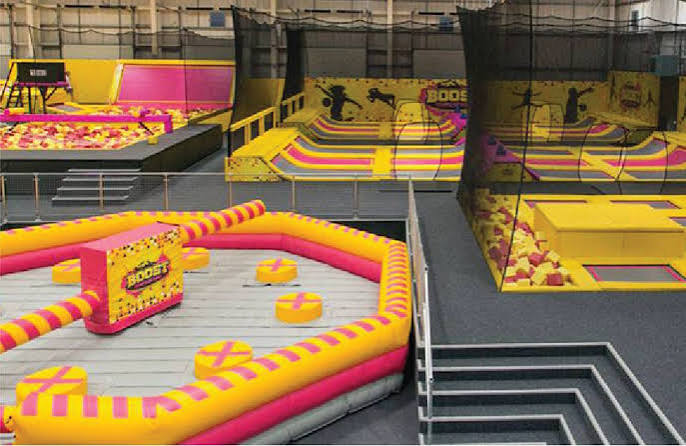

A thoughtfully designed trampoline area can become the central attraction of an indoor adventure center while allowing visitors to participate in active recreation.
Foam Pits and Airbag Landing Areas
Landing zones are another important part of a modern trampoline park. Foam pits can provide a designated area where visitors can practice jumps and other recreational movements trampoline park equipment in a controlled environment.
Airbag landing systems are another option for certain attractions. They can create a soft landing surface while offering a different experience from traditional foam pits.
These areas should be designed with suitable entry and exit points, appropriate padding, clear supervision, and proper maintenance procedures. Regular inspection is essential to ensure that landing materials and surrounding surfaces remain in suitable condition.
Trampoline Basketball Courts
Combining trampolines with basketball adds another dimension to an indoor adventure center. Trampoline basketball courts allow visitors to jump while attempting basketball shots, making the activity appealing to sports enthusiasts and recreational users.
The height and positioning of basketball hoops should be selected according to the intended users and facility design. Protective padding around relevant structures can also help improve the overall environment.
Multiple courts can be useful for larger facilities because they allow groups to participate at the same time. Basketball zones can also be incorporated into larger activity areas to make efficient use of available space.
Dodgeball Trampoline Areas
Dodgeball is a popular group activity that can make a trampoline park more social and competitive. Dedicated trampoline dodgeball courts can provide an organized space where visitors participate in team-based games.
A properly designed court should have clear boundaries and suitable protective features. Dividing the activity area from general jumping zones can also help organize visitor movement and reduce unnecessary congestion.
For operators, group activities such as dodgeball can be useful for birthday parties, school visits, and other organized events.
Ninja and Obstacle Course Equipment
Adventure centers can increase their appeal by adding obstacle-course attractions. Ninja-style courses may include climbing walls, balance elements, stepping platforms, hanging obstacles, tunnels, and other physical challenges.
These attractions provide visitors with opportunities to test coordination, balance, strength, and agility. They can also create an attractive focal point within the facility.
The difficulty level can be designed around different age groups. Some facilities may offer beginner-friendly obstacles, while larger centers can include more challenging sections for experienced participants.
Climbing Walls and Adventure Features
Climbing walls can complement trampoline areas by introducing a different type of physical activity. They can be designed in various heights and configurations to match the facility’s target audience.
Other adventure features may include rope elements, suspended obstacles, climbing nets, and interactive challenges. Combining these attractions can transform a basic trampoline facility into a more comprehensive indoor adventure center.
As with all major attractions, climbing equipment should be professionally designed and installed with appropriate safety systems, inspection procedures, and supervision requirements.
Interactive and Technology-Based Attractions
Modern indoor adventure centers increasingly use interactive technology to create engaging experiences. Interactive walls, digital games, reaction challenges, and projection-based activities can provide alternatives to traditional physical attractions.
These systems can be particularly useful when operators want to create different experiences within the same facility. Technology-based activities can also help diversify the entertainment offering and encourage repeat visits.
When choosing interactive equipment, operators should consider software reliability, maintenance, user capacity, and compatibility with the overall facility design.
Safety and Protective Equipment
Safety should be considered alongside entertainment when selecting trampoline park equipment. Commercial facilities need suitable padding, protective barriers, safety signage, flooring, and other protective features.
Equipment should be selected from reputable manufacturers that provide clear installation and maintenance information. Operators should also establish regular inspection routines and staff training procedures.
Staff members should understand the rules for each attraction and know how to manage visitor flow. Clear instructions can help visitors understand how to use different areas appropriately.
The facility should also maintain appropriate cleaning and maintenance schedules. Frequently used equipment requires regular checks for wear, loose components, damaged padding, and other potential issues.
Designing an Efficient Indoor Adventure Center
Choosing individual attractions is only one part of creating a successful trampoline park. The equipment should work together as part of an efficient floor plan.
Visitor flow is an important consideration. High-energy attractions should be positioned so that users can move between activities without unnecessary congestion. Seating areas, reception zones, party rooms, storage spaces, and staff areas should also be considered during the planning process.
Different attractions can be grouped according to activity type or age suitability. This approach can make the facility easier to navigate while helping staff monitor different zones.
A balanced design should provide enough variety without making the facility feel overcrowded.
Choosing the Right Manufacturer
The manufacturer selected for a trampoline park project can significantly influence equipment quality and long-term performance. Buyers should research manufacturers carefully and evaluate their experience with commercial indoor entertainment projects.
Important considerations can include material quality, customization options, installation support, maintenance guidance, replacement parts, warranty terms, and compliance with applicable safety standards.
Customization can also help an adventure center develop a distinctive appearance. Colors, layouts, branding elements, and attraction combinations can be adapted to create a unique customer experience.
Building an Attraction That Encourages Repeat Visits
A successful indoor adventure center should give visitors reasons to return. Offering several types of activities is one way to achieve this goal.
Operators can introduce seasonal activities, group competitions, special events, and birthday packages to keep the experience interesting. New interactive attractions can also be introduced as the business grows.
The best facilities balance entertainment with thoughtful design, dependable equipment, and effective management. Rather than simply filling the available space with attractions, operators should create an environment where each feature has a clear purpose.
Conclusion
Building an exciting indoor adventure center requires careful planning and the right combination of attractions. From interconnected trampolines and foam pits to basketball courts, dodgeball zones, climbing walls, obstacle courses, and interactive games, trampoline park equipment can transform an ordinary indoor space into a dynamic entertainment destination.
Safety, durability, facility layout, visitor flow, maintenance, and equipment quality should all be considered before making purchasing decisions. Working with an experienced manufacturer and developing a well-planned attraction mix can help create an enjoyable environment for visitors while supporting the long-term goals of the business.